
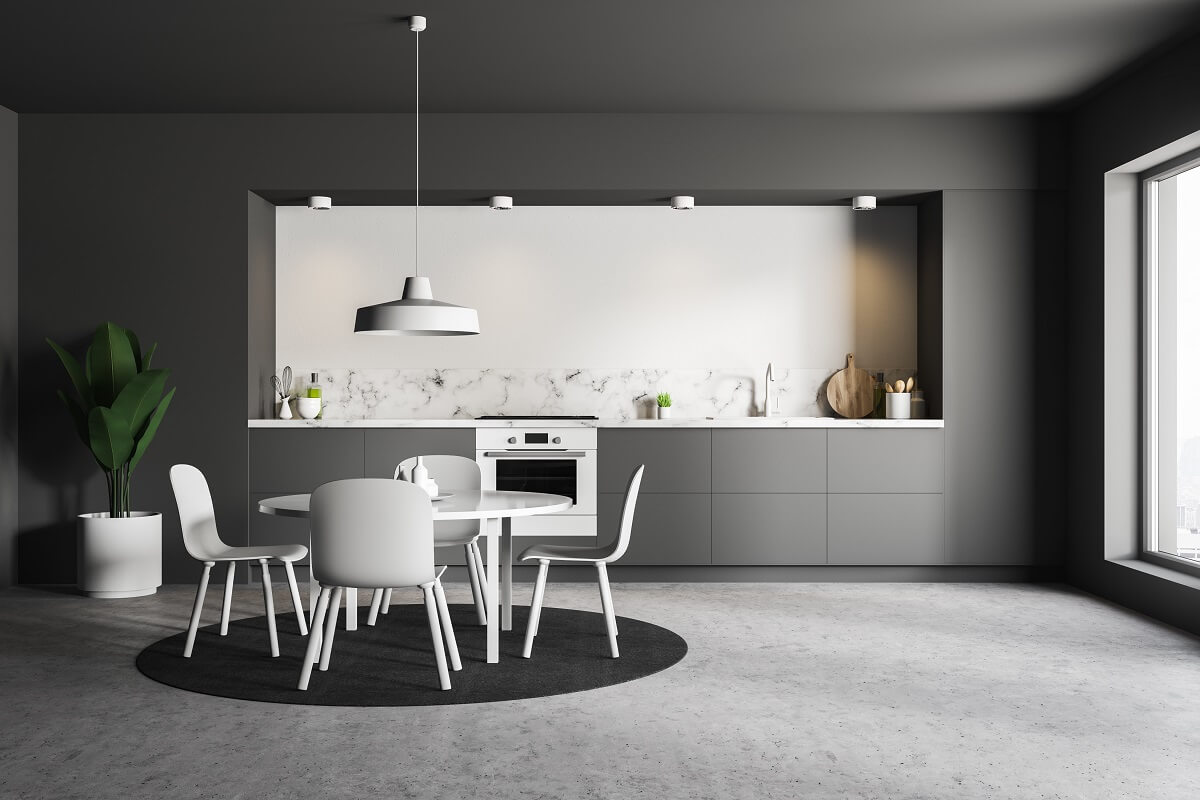
Just like a healthy balanced breakfast, your kitchen requires the right balance of lighting to get you on the right track to accomplish the day’s tasks.
From homework to list-making to actual meal-prep and cooking, the kitchen is a veritable workhorse in the home. And the proper lighting mix—recessed downlighting, island-highlighting pendants, under-cabinet LEDs—will make sure it’s fit for all of those uses.
With this guide, we’ll walk you through the ins and outs of the best modern kitchen lighting fixtures.
Let There Be Lights
There are various types of lighting, you need to know:
Task Lighting:
Task lighting is one of the major types of kitchen lighting and there are several different ways to incorporate it into your design. Task lighting is definitely important as it’s placed over the work areas of the kitchen where you prepare food such as countertops, islands, and peninsulas. Generally, this includes under-cabinet lighting fixtures as well as track lighting. You can even spotlight the area over the sink where you wash dishes. If the task lighting is misplaced, it might cast shadows onto your work zone, hindering you from properly cutting, prepping, plating, or reading recipes. Definitely make sure you test out the task lighting placement before making anything permanent.
Under-Cabinet Lighting:
Under-cabinet lighting can serve as a benefit in multiple ways in your kitchen. It can serve as ambient lighting that simply serves as a decoration to offer a warm glow to your kitchen counters. These can be in the form of strip lights or bar lights that runs across the bottom of your cabinets or as puck lights (hockey puck-shaped halogen lights). Under-cabinet lighting can also help perform as your task lighting over your countertops.
Ambient Lighting:
Ambient lighting in a kitchen illuminates the general area with either wall sconces, pendant lights, chandeliers, wall lanterns, recessed lighting, or track lighting. Ambient lights create a mood or tone in the space. In some cases, the pendants can also be used as task lighting as they may be placed over islands for a decorative effect but also serve as direct lighting to this area for prepping. This form of lighting adds ambiance to the room and creates a warm, inviting space.
Accent Lighting
If there’s a specific area in your kitchen that you want to highlight or draw attention to, use accent lighting. It adds drama to a space with visual interest. Accent lighting may be placed above artwork, plants, or your collectible items with recessed lighting, track lighting, or spotlights. You can also install them inside glass cabinet doors to illuminate your China, glassware, or decorative serving trays. Aran Cucine features LED strip lighting that turns on when you open the cabinet doors as well as lights that you can switch on to illuminate the glass cabinet doors. This lighting isn’t necessary to complete the lighting in the kitchen, but it does add a decorative layer that will serve as a focal point in your space.
Decorative Lighting:
The main purpose of this type of lighting is simply for decoration. They come in the form of hanging pendants or chandeliers typically placed over a kitchen island or peninsula. These fixtures are usually dramatic as they are meant to draw attention, but make sure the size you choose for your lighting fixture is proportionate to the size of your kitchen. If you’re working with a small kitchen, you don’t want the decorative lighting to be so large that it will make the space feel cramped.
Toe-Kick Lighting:
Illuminate your kitchen island or wall cabinets with toe kick lighting to emphasize the size of the space and create a safe path for walking – a perfect option for a night light. Simply install a strip of LED lighting to your toe kick to define the space. If your kitchen floors are glossy, the strip lighting will reflect off them, so opt for a more diffused style or mount the LED strips on the side of the toe kick rather than directly underneath the cabinets or island. Although this type of lighting is softer and is not meant to illuminate your workspace, it definitely adds style to your kitchen.
Room lighting
This is typically set as recessed lighting or large ceiling fixtures meant to illuminate the entire kitchen area. These are the main lights you turn on in the kitchen when you walk in. It can be good for entertaining guests, but it wouldn’t be a good option for task lighting as it doesn’t spotlight your specific work zone and it might be too harsh or bright for ambient lighting.
Making It All Work Together
Typically, a kitchen will have a working combination of each of these lighting variations and it can all work perfectly to set the mood, entertain guests and prepare meals if layered properly. While all you really need is room lighting for general illumination, it’ll be ideal to incorporate task lighting specifically for all your kitchen tasks. Designing your space with ambient and accent lighting will combine aesthetics with function and illuminate your space beautifully, making your kitchen feel complete, warm, and inviting. Definitely connect your lighting fixtures to dimmers so you can control the brightness for each one depending on the mood you want to set. You can even set your lights to a home lighting automation system that sets “scenes” based on what you preset. One-click and the mood in your space will be exactly how you want it. Examine your space, the tasks you typically perform in the kitchen, and the mood you want to set and it’ll be easier to decide what lighting works best for your needs.